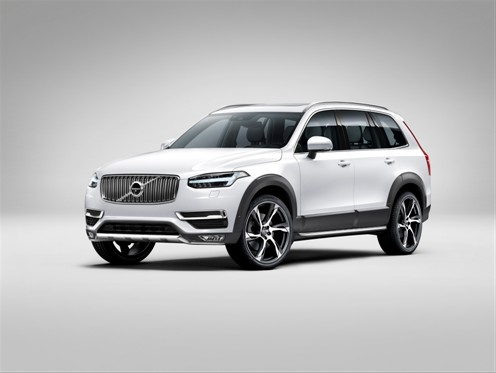
A true seven-seater, all-electric SUV that further raises Volvo’s standards in safety and a more sustainable lifestyle: the new Volvo EX90 represents the start of a new era for Volvo in which they have set a decisive course for a fully electric future.
Starting with the Volvo EX90, they will reveal one new fully electric car each year. By 2030, Volvo aims to sell only fully electric cars, one of the most ambitious electrification blueprints in the automotive industry and crucial to Volvo’s ambition to be a climate-neutral company by 2040.
They revealed their new fully electric flagship SUV to the world in downtown Stockholm today, reflecting their Swedish roots. At the same time, reflecting their global footprint as a company, the Volvo EX90 will be built in the USA starting next year and later also in China. By then, Volvo aims for those two production facilities to be climate-neutral.
A new instant classic in Scandinavian design, the Volvo EX90 defines the principle of form following function. It’s a versatile, stylish family car with modern proportions, combined with cutting-edge technology in core computing, connectivity and electrification to optimise safety, efficiency and aesthetics. In terms of range, expect up to 600 KMs on a charge.
Keeping you and your loved ones safe
The standard safety in the Volvo EX90 is also higher than any Volvo car before it. It’s designed to understand you and its surroundings to help keep you, your loved ones and others in traffic safe. It can also get smarter and safer over time, as it learns from new data and receives updates.
The Volvo EX90 has an invisible shield of safety enabled by their latest sensing technology, inside and outside. State-of-the art sensors like cameras, radars and lidar are connected to the car’s high-performance core computers, where NVIDIA DRIVE runs Volvo Cars’ in-house software to create a real-time, 360-degree view of the world.
Volvo’s sensors don’t get tired or distracted. They are designed to respond and react when you’re just a fraction too late. Their lidar can sense the road in front of you, whether it’s day or night, also at highway speeds. It can see small objects hundreds of metres ahead, creating more time to inform, act and avoid. The sensors also contribute to improve the reliability and overall performance of our assisted driving function Pilot Assist, with a new steering support while changing lanes.
Inside, their invisible shield of safety also looks out for you. Special sensors and cameras, powered by their own in-house developed algorithms, gauge eye gaze concentration. The technology allows the EX90 to understand when you’re distracted, drowsy or otherwise inattentive, beyond what has been possible in a Volvo car to date.
It’ll alert you, first softly nudging, then more insistent. And if the unthinkable happens, and you fall asleep or are taken ill while driving, the Volvo EX90 is designed to safely stop and call for help
Finally, thanks to the state-of-the-art sensor set including lidar, the Volvo EX90 is the first Volvo that’s hardware-ready for unsupervised driving in the future.
Technology with a purpose
A core system – powered by NVIDIA DRIVE platforms Xavier and Orin for safety systems and AI, Qualcomm Technologies’ Snapdragon® Cockpit Platforms and in-house developed software by Volvo engineers – runs most of the core functions inside the car, from safety and infotainment to battery management. The end result is a more responsive and enjoyable experience inside the car.
In other words, your Volvo EX90 won’t be just a new car, it will be a highly advanced computer on wheels. Even better, just like your smartphone or your laptop, the Volvo EX90 is designed to get better over time, thanks to regular over-the-air software updates.
By combining the state-of-the-art computing power from Qualcomm Technologies Snapdragon’ Cockpit Platforms with the visualisation capabilities of Unreal Engine, the 3D tool developed by Epic Games and used to power some of the world’s largest games, to give you lightning-fast computing power and high-quality graphics on the in-car screens and head-up display
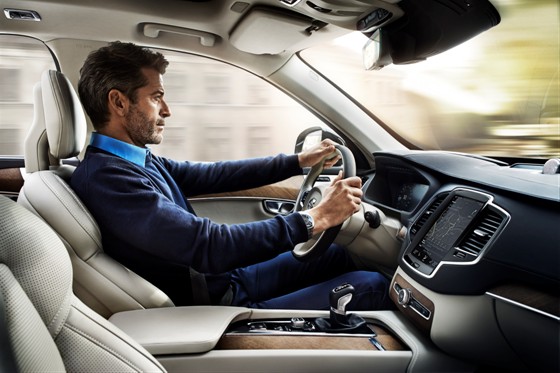
A 15-inch centre screen is your gateway to one of the best infotainment systems on offer, with Google built in. Google apps and services including hands-free help from Google Assistant, Google Maps navigation and more of your favourite apps on Google Play all come built in. The displays in the Volvo EX90 help you keep your eyes on the road by offering you the right information at the right time. The Volvo EX90 will also be compatible with wireless Apple CarPlay.
Thanks to the standard 5G connection where available, it’s never been easier to install the apps you need on your home screen and enjoy highly intuitive navigation. You can also stream your favourite music through the new, reference-quality Bowers & Wilkins audio system featuring Dolby Atmos as a Volvo-first, plus head rest-integrated speakers for immersive sound.
The Volvo EX90 will also come with phone key technology as standard. Your smartphone serves as your car key and automatically unlocks the car and starts a personal welcoming sequence as you approach. Your personal profile will also be loaded automatically as you enter the car
All of this technology comes together in one of the most pleasant and elegant car interiors on the market, full of natural and responsibly-sourced materials. That interior composition also reflects our sustainability ambitions, such as being a fully circular and climate-neutral company by 2040.
Supporting a more sustainable lifestyle
With its brand new, in-house developed fully electric technology base, the Volvo EX90 is your perfect companion for a more sustainable family lifestyle. Delivering up to 600 kilometres of tailpipe emission-free driving range on a single charge, according to the WLTP test cycle, it charges from 10 to 80 per cent in under 30 minutes.
The initially available twin-motor all-wheel drive version is powered by a 111kWh battery and two permanent magnet electric motors together delivering 380 kW (517 hp) and 910 Nm of torque. In combination with the brand new chassis, this creates a great and smooth driving experience.
The Volvo EX90 contains approximately 15 per cent of recycled steel, 25 per cent of recycled aluminium as well as 48 kilogrammes of recycled plastics and bio-based materials, which corresponds to around 15 per cent of the total plastic used in the car – the highest level of any Volvo car to date.
Finally, the Volvo EX90 is their first car with all the necessary hardware to enable bi-directional charging. It’s a technology whereby you can use your car battery as an extra energy supply, for example to power your home, other electric devices or another electric Volvo car. They plan to make bi-directional charging available in the future, starting with selected markets.


Volvo cars now with Google Gemini
Posted in Commentary with tags Volvo on April 30, 2026 by itnerdMoving beyond fixed voice commands, Gemini introduces an intuitive, intent-based experience where the car can understand natural conversation, context and the driver’s needs. This makes life on the road easier and more enjoyable.
The rollout begins with a first wave of customers in the United States, before scaling across the country and into additional markets in the weeks ahead and Canada later this year Drivers of Volvo cars dating back to 2020 will be among the first to experience Google’s next-generation AI assistant.
A more natural way to interact
But what does this look like in the real world?
Collaborating to push boundaries
In 2025, Google selected Volvo Cars as a lead development partner for new in-car features and updates, giving Volvo Cars a direct role in shaping how new technologies, like Google Gemini, are developed for real-world driving and the Volvo experience.
Through over-the-air updates, Volvo Cars is bringing new software experiences to cars already on the road. In March 2026, Volvo Cars launched one of the most comprehensive infotainment updates by any car maker to date, beginning the rollout of Volvo Car UX – a more intuitive user experience – to millions of customers worldwide.
(add something around Canada market timing planned for later this year)
The small print
Leave a comment »