Archive for October, 2026

Q3 2026 Ransomware Roundup: Stats on attacks, ransoms, and active gangs

Posted in Commentary with tags on October 6, 2026 by itnerd

According to a new Comparitech study published today, Q3 2026 saw the highest quarterly figures to date with 2,627 ransomware attacks in total – an average of nearly 29 per day. This is a 29 percent increase on Q2 2026 which logged 2,030 attacks in total, and a 61 percent increase on the same period last year (Q3 2025). 

Additional key findings include:

  • Of 247 confirmed attacks:
    • 138 were on businesses
    • 53 were on government entities
    • 36 were on healthcare companies
    • 20 were on educational institutions
  • Of the 2,380 unconfirmed attacks*:
    • 2,096 were on businesses
    • 71 were on government entities
    • 152 were on healthcare companies
    • 55 were on educational institutions
  • Median ransom demand: $150,000 (average: $602,400)
  • The most prolific ransomware gangs were Qilin and The Gentlemen

For full details, the research can be read here: https://www.comparitech.com/news/ransomware-roundup-q3-2026-stats-on-attacks-ransoms-and-active-gangs/

Rebecca Moody, Head of Data Research at Comparitech, provided the following comment: 

“I’m often asked what I think lies ahead in the ransomware threat landscape, and it’s notoriously difficult to predict. Figures frequently fluctuate and a sector might see a bit of an increase one month, only to see a slight decrease the next month. However, Q3 2026 is different. We’re not seeing slight increases or decreases. We’re seeing significant increases across all key sectors.

Government agencies, healthcare providers, and the education sector all saw huge increases, as did the majority of business sectors. Seeing some of the most significant rises were tech companies (who often deal with multiple companies and are, therefore, a great central target for hackers), finance companies (who may also deal with a number of companies and/or store highly sensitive data), and utility companies (that form an integral part of our critical infrastructure). 

What’s also of note is hackers’ increasing attempts at triple extortion. They’re not only seeking to encrypt systems and steal data, but are also looking to target individuals/individual companies impacted in an attack. A prime example is The Gentlemen’s recent attack on MIP Holdings (a South African tech company). After being targeted by the group in June 2026, MIP paid a ransom to have stolen data deleted. Over the last few weeks, however, The Gentlemen has started adding MIP’s clients to its data leak site in a bid to get a ransom out of them, too. A key reminder that paying a ransom is absolutely no guarantee that your stolen data will be deleted!”

Ahead of Samsung’s smart glasses launch, study reveals privacy risks across 7 rival brands 

Posted in Commentary with tags on October 6, 2026 by itnerd

With Samsung reportedly preparing to launch its first Android XR smart glasses in November, a new Cybernews analysis of 7 existing AI smart glasses brands reveals the privacy risks users may face as the technology becomes more widespread.

Researchers examined smart glasses from Meta, Rokid, RayNeo, INMO, Solos, Even Realities, and Halliday, looking at app permissions and trackers, as well as 9 privacy criteria covering areas such as camera indicators, data retention, on-device processing, and dedicated privacy documentation.

Key findings:

  • Meta requests the most permissions overall (70) and the most dangerous permissions (18), including access to read external storage and SMS and to record audio.
  • INMO Global and Solos AirGO contain the most trackers, with 6 detected in each app, while Hi Rokid is the only app with no trackers detected.
  • All 7 analyzed apps rely on cloud processing for their AI features – none runs core features such as voice, translation, or image analysis locally on the glasses.
  • 5 of 7 brands don’t specify any data retention limit.
  • Only Meta and Rokid have a confirmed response when the glasses’ recording indicator light is covered.
  • Only 3 of the 7 brands – Meta, Rokid, and Even Realities – have privacy documentation specifically written for their glasses.

The findings show that the privacy risks of smart glasses extend beyond people who may be unknowingly recorded to the people wearing the devices themselves.

Full research:

https://cybernews.com/ai-news/smart-glasses-privacy

OpenTable and Visa Extend Their Agreement in the U.S., Mexico and Canada

Posted in Commentary with tags on October 6, 2026 by itnerd

OpenTable and Visa today announced a renewed agreement across the U.S., Mexico and Canada. The next phase will broaden the Visa Dining Collection in Mexico and Canada and deliver an expanded events program, giving eligible Visa cardholders more ways to discover and book memorable dining experiences across the three countries.

The Visa Dining Collection Grows Across Canada and Mexico

The Visa Dining Collection will continue as part of a new multi-year agreement in Canada and Mexico, providing eligible Visa cardholders with exclusive access to sought-after restaurant reservations in Mexico City, Monterrey, Los Cabos and Cancun, as well as Toronto, Montreal, Vancouver, Calgary and surrounding areas.

The participating portfolio includes restaurants from MICHELIN Starred venues to local favorites and beloved culinary destinations. Existing restaurants within the Visa Dining Collection are returning to the program including Mon Lapin and Rôtisserie La Lune in Montreal, LOREA and Pargot in Mexico City and KOLI in Monterrey, with new additions coming soon.

Eligible Visa cardholders in Mexico and Canada will also have access to a new roster of exclusive dining events and experiences featuring renowned chefs and rising culinary stars. Eligible Visa Infinite cardholders world-wide traveling to Mexico or Canada will be able to book held tables and events at participating restaurants through the Visa Dining Collection, while those visiting the U.S. can access and book special events.

Events Continue in the U.S. Following Strong Demand

In addition to delivering events programming in Mexico and Canada, OpenTable and Visa are expanding their events program in the U.S. through 2029.

The expansion comes following a successful events calendar over the past two years, which saw over 80 bespoke events, the majority of which sold out. This includes Friends in Town, where chefs invited their friends to town to cook one-of-a-kind collaboration dinners, and Off the Clock, an after-hours dining experience inspired by late-night chef rituals. It also reflects a growing demand for dining experiences that go beyond the norm, which diners are seeking out more than ever. This year, 48% of Americans said they are more likely to dine at a restaurant when it’s hosting a pop-up, collaboration, or special experience.

To explore the Visa Dining Collection, visit pages for Mexico and Canada. North America events to be announced at a later date via opentable.com/visa-dining-program/events.

*Methodology

An online survey was conducted by WALR among 1527 US respondents, with quotas weighted for major cities. Fieldwork took place between September 3rd – September 9th 2025. Data has been collected adhering to MRS (Market Research Society) and ESOMAR guidelines to ensure ethical and accurate data collection.

CrashPlan Expands SMB Data Protection Portfolio with Server and Google Workspace Backup

Posted in Commentary on October 6, 2026 by itnerd

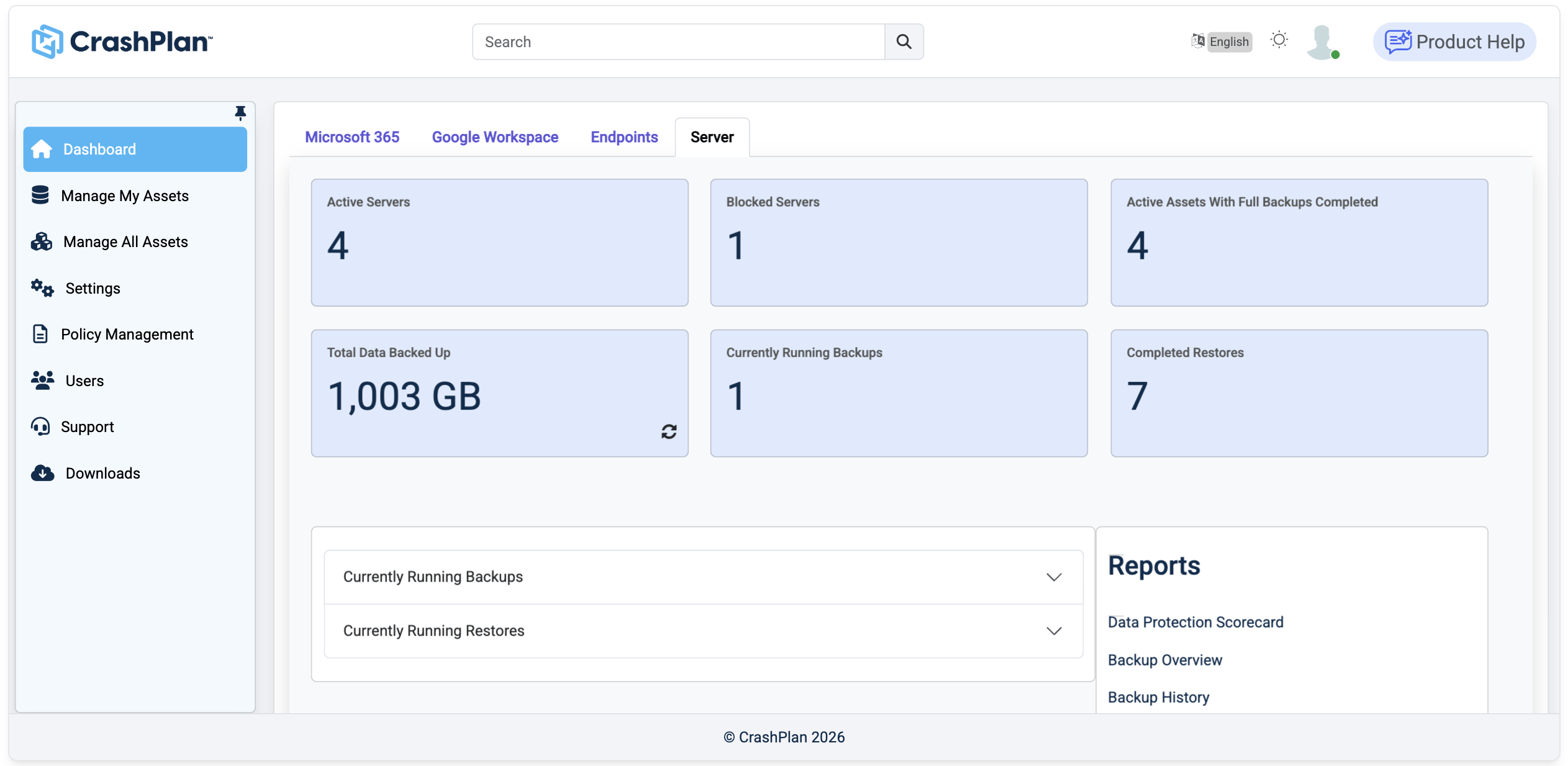
CrashPlan today announced backup and recovery for Windows and Linux servers and Google Workspace, built for small businesses. This extends CrashPlan’s SMB offering to protect the full range of data their operations depend on. Businesses with fewer than 250 users can trial and purchase the new protection directly online.

SMBs face outsized challenges: IT teams that have to wear many hats, and the same financial, operational, and legal risks that large organizations face – without enterprise-level budgets. Small businesses bear the brunt of ransomware: 96% of ransomware victims are small and midsize businesses (Verizon 2026 DBIR). In extreme cases, a breach can cost a small business more than 7% of annual revenue (Verizon 2026 Breach Impact Study). Unexpected data loss can slow down teams, stall audits, erode customer trust, and expose the business to risk. CrashPlan’s expanded capabilities meet these challenges by providing enterprise-grade protection tailored to SMB budgets and teams.

Recognized as a secure, robust backup and recovery solution for computers, laptops, servers, Microsoft 365, and Google Workspace, CrashPlan makes data protection easy for SMBs with limited IT resources. Its cloud-based backup protects businesses from unexpected disasters, deletions, or cyberattacks without being slowed down. Additionally, its simple setup gets the business up and running with continuous, automatic backups within minutes.

CrashPlan Windows and Linux Server Backup

Windows and Linux Servers keep the business going. When ransomware, hardware failures, accidental deletions, or outages happen, recovering quickly matters. Protecting that data should not require enterprise complexity or an enterprise budget. CrashPlan takes a different approach, with simple deployment and administration, minimal maintenance and infrastructure overhead, and secure, affordable cloud storage that scales as needed.

Key capabilities include:

Protect data without complexity

  • Automatic, continuous backups based on customized and easy-to-set policies
  • Simple deployment and administration with minimal maintenance
  • Dedicated visibility dashboards to monitor server backup status and activity

Recover quickly when something goes wrong

  • Fast, reliable restores with a simple, proven recovery process
  • Flexible recovery with granular file-level restores, system files, folders or entire server data
  • Immutable, isolated backups for trusted and rapid ransomware recovery

Safeguard the business without breaking the budget

  • Secure cloud-based backup designed for SMB budgets
  • Affordable, predictable cloud storage that can scale as business data grows
  • Deduplication, compression and incremental backups reduce storage requirements and backup transfer volume without data loss

CrashPlan Backup for Google Workspace

Gmail and Google Drive are not immune to accidental deletions, ransomware, sync errors, or user mistakes. Google’s built-in retention and recovery tools are not a complete backup solution, and in fact, Google recommends having a third-party backup and recovery solution in place. CrashPlan for Google Workspace lets SMBs back up and recover their Google Workspace data and, as a result, they can meet compliance requirements, protect against ransomware, and get employees working again quickly after data loss.

Key capabilities include:

Ensure complete data protection

  • Backup and recovery for Google Workspace data, including files in Google Drive and emails and attachments in Gmail
  • Immutable backups that offer separate, secure copies of critical Gmail and Google Drive data outside the Google Workspace environment.
  • Rich backup and recovery capabilities that extend beyond Google’s native 30-day retention, limited versioning, and restricted recovery capabilities

Ease and accelerate the recovery process

  • Fast, point-in-time recovery
  • Granular or full-site restore options
  • Self-service restore with indexed search so employees can search for and recover their own lost files or emails

Make it simple and affordable

  • Easy setup and simple, centralized policy management with role-based access control
  • Automated, cloud-to-cloud backups that run in the background
  • 50 GB of cloud storage per user, which is pooled, to maximize storage capacity usage across users, while deduplication and compression ensure data takes up as little space as possible

CrashPlan’s full suite of products makes it easy to keep critical business data protected – no enterprise-level overhead or costs, just reliable protection that helps SMBs recover quickly when something goes wrong.

CrashPlan Windows and Linux Server Backup and CrashPlan Backup for Google Workspace are generally available now, each with a 14-day free trial. For more information, visit. smb.crashplan.com/free-trial/

Google PageBreak AI Finds 500+ Vulnerabilities

Posted in Commentary with tags on October 5, 2026 by itnerd

Google describes PageBreak as an internal AI agent used by its Product Security team to test first-party web applications. The project began as a pilot in November 2025 and became a fuller project in January 2026. Google says most of its usage is based on Gemini models, while the system is flexible enough to work with different models.

The problem PageBreak targets is not only discovering possible vulnerabilities. It is separating exploitable defects from noisy, unverified output. Google says PageBreak has uncovered more than 500 XSS vulnerabilities across first-party applications, while its validation loop is intended to keep unverified candidates away from product teams.

The result is better described as an agent-plus-verifier system than as a model that independently proves every security claim. The model helps navigate code and application behavior; specialized tooling supplies the evidence.

More info here: https://cybersecuritynews.com/googles-ai-hacker/

Jacob Krell, Sr. Director: Security AI Solutions & Cybersecurity, Suzu Labs (https://www.linkedin.com/in/jacob-krell)

“AI is a good fit for vulnerability discovery because it can take an action and check what happened. That gives it something concrete to work with. Google says its PageBreak agent has found more than 500 cross-site scripting (XSS) bugs, which can let an attacker run their own JavaScript in someone else’s browser. When PageBreak spots a possible flaw, a separate validator tries the attack against a running application. If the code runs, there is evidence. If it does not, the finding stays a possibility.

“That is a better use of AI than asking a model to read code and write a confident explanation of why something might be vulnerable. The same approach can work for other issues. The system can try a SQL injection, check whether a file can be retrieved through path traversal, or see whether a server-side request forgery (SSRF) causes the application to contact an internal service. It can run the test, inspect the result, and decide what to try next.

“Google says this has produced a near-zero false-positive rate. That claim applies to the checks PageBreak knows how to run. It does not mean the applications are secure. The agent can still miss a vulnerability if the validator does not cover that type of attack, or if the test environment does not match the real one. That is the false-negative problem.

“I would much rather review a smaller list of vulnerabilities with working evidence than a huge list of theories generated by an AI model. The more security work can be turned into ‘run something, observe the result, and make the next decision,’ the more useful AI becomes. PageBreak is interesting because it applies that idea to real vulnerability testing instead of treating the model’s explanation as proof.”

Darin Fredde, Sr. Director of Technical Marketing Engineering, Ridge Security (https://www.linkedin.com/in/darinfredde)

“What stands out about Google’s PageBreak work is the shift from identifying a potential vulnerability to proving exploitability. That distinction matters. Security teams don’t need more theoretical findings; they need evidence showing what an attacker can really do. We’re seeing offensive security mature from periodic, point-in-time testing toward continuous, evidence-backed validation. Agentic AI can help scale that work by reasoning through attack paths, validating findings, and repeating tests as environments change. The model itself is only part of that equation; the surrounding testing framework, guardrails, evidence, and ability to operate within an organization’s security boundary matter just as much.

“The larger takeaway from PageBreak is that offensive testing is becoming more continuous, autonomous, and evidence-driven. Finding something is no longer enough. We increasingly need to prove it, fix it, and verify that the fix worked.”

Once again I am telling the world that they need to defend against AI related threats. Otherwise your adversaries will will use AI to pwn you in epic fashion.

Hackers breached propulsion system of U.S.-bound oil supertanker

Posted in Commentary with tags , on October 5, 2026 by itnerd

The FBI and The U.S.Coast Guard investigators found evidence that hackers gained access to the digital propulsion system of the VL Prosperity, a fully loaded oil supertanker bound for Galveston, Texas, according to Bloomberg.

The hackers had temporary access to the propulsion system as the vessel approached the Texas coast this summer. Investigators have not determined how the attackers gained access, how long they remained in the system, who was responsible or what ship functions they may have been capable of controlling.

The FBI and Coast Guard boarded the VL Prosperity in August after the vessel lost communications and authorities received indications that its network had been compromised. The agencies also boarded a second vessel in the Gulf of Mexico because of a suspected cyber threat. By September, U.S. agencies were tracking cyber threats involving nearly 20 vessels around the world and had requested advance notice if any planned to enter a U.S. port. The VL Prosperity remains anchored offshore Galveston as the investigation continues.

Jacob Krell, Senior Director: Secure AI Solutions & Cybersecurity, Suzu Labs:

“Access and control are separate findings, and the public evidence on VL Prosperity stops before engine control. If investigators can show that an intruder reached a write-capable propulsion controller and issued a valid command, this would be the first publicly documented, independently confirmed cyberattack against a commercial vessel’s propulsion controls. That is a much bigger claim than temporary access to a digital system.

“Bloomberg reports that investigators found temporary access to the tanker’s digital propulsion system. The public joint statement from the Federal Bureau of Investigation and U.S. Coast Guard says the agencies boarded the vessel to examine its information technology (IT) and operational technology (OT) systems after indications that its networks were compromised. It reports no operational disruption, vessel instability, physical danger to the crew, or environmental impact.

“That distinction matters because a propulsion-related bridge console, engineering workstation, machinery automation gateway, and engine controller are materially different findings. The U.S. Coast Guard’s 2019 response to a malware incident aboard a deep-draft vessel is the useful comparison. The malware seriously degraded the ship’s onboard computer network, but investigators found that essential vessel control systems were unaffected. Maersk made a similar distinction during the 2017 NotPetya attack, when its shore and terminal systems were disrupted while its vessels remained maneuverable.

“The closest publicly documented physical-control event was the 2013 University of Texas test that moved a yacht off course by spoofing the Global Positioning System (GPS) and inducing navigation corrections. The researchers did not control the engine. In 2025, French authorities investigated Remote Access Trojan (RAT) malware found on the Fantastic ferry, but the operator said the intrusion was neutralized without operational consequences.

“VL Prosperity could change that record. The decisive evidence is a forensic trail showing a write-capable session sent a valid command to the engine controller and that the controller accepted it. Until authorities produce that, call this a propulsion-access incident. The public record does not yet support a confirmed propulsion takeover.”

ㅤ

Damon Small, Board of Directors, Xcape, Inc.:

“The rapid escalation from a single novel maritime intrusion to federal tracking of nearly 20 compromised vessels globally directly threatens an already precarious global oil market, creating upward pressure on crude prices and downstream refined products. These supertankers operate as self-sufficient floating cities governed by complex operational technology (OT) systems that manage crew life support, navigation, and critical cargo onboarding and offboarding. Although threat actor attribution remains unconfirmed, the scale and sophistication strongly suggest coordinated state-sponsored activity targeting maritime OT.

“A widespread compromise across vessel networks could ground entire fleets or trigger catastrophic physical disruption at sea. To mitigate these systemic risks, asset owners must enforce rigorous physical and digital network segmentation between vessel bridge controls, satellite communications, and IT networks, while implementing unidirectional security gateways and mandatory anomaly monitoring across onboard industrial control systems.”

“Critical Takeaways

  • “Escalating Market Impact: Global tracking of nearly 20 compromised vessels shifts maritime cyber risk from an isolated novelty to a material supply chain threat capable of driving up global oil prices.
  • “Complex OT Vulnerabilities: Supertankers rely on interconnected OT for life support, propulsion, and cargo operations, making unauthorized access to onboard control networks potentially devastating to fleet operations.
  • “Essential Defensive Controls: Security teams must enforce strict network segmentation between bridge IT, satellite communications, and OT systems, backed by unidirectional gateways and continuous industrial network monitoring.

“Air-gapping vessel networks only works if you do not run an ethernet cable straight from the satellite dish to the propulsion engine.”

Ladies and gentlemen, we welcome you to your next high value target. The good thing is that many of the defensive strategies are pretty much the same. Therefore those should be employed ASAP.
Inside a 50TB ransomware operation exposed by one open server

Posted in Commentary with tags on October 5, 2026 by itnerd

A Russian-speaking ransomware affiliate spent months breaching companies across six countries, then quietly betrayed the gang he worked for, running his own leak site on the side and publishing victims independently. A single exposed server gave up the whole operation, and a new investigation from CloudSEK’s threat intelligence team has now mapped it end to end.

Key highlights from the report:

  • The betrayal. The actor, who calls himself Azazel, worked as an affiliate of the Gentlemen ransomware group, using its tooling, negotiation channels and ransom note template. At the same time he ran an independent leak site, LEAKNED, publishing victim data independently without routing it through the Gentlemen program. Victims were exposed to both. It is not a pattern seen often in the affiliate world.
  • The scale. More than two dozen organisations across logistics, insurance, pharmaceutical, AI, medical devices and government-adjacent infrastructure, in six countries. The operator ran more than 50TB of dedicated physical servers, including a 22TB long-term vault built to retain loot across multiple campaigns, far larger than a typical affiliate setup.
  • One way in. Every confirmed victim was reached through stolen CI/CD secrets. A single compromised GitLab instance produced footholds at two unrelated organisations, and one CI/CD token exposed more than 150 databases across a SaaS platform and its clients, according to the operator’s own published claims.
  • A criminal first with AI tooling. Azazel registered a reverse shell as a callable tool inside an AI agent harness via the Model Context Protocol, and ran his attacks through it. CloudSEK found no prior public reporting of this technique outside this operation. He also built infrastructure to scan the internet for exposed AI assistant ports, and used an AI assistant to manage his own criminal infrastructure.
  • A deeper second campaign. Against one AI company, he ran a sustained compromise that began with an unvalidated AI imaging API, then moved through bulk credential decryption, a JWT token recovered from git history, offline Grafana password cracking and a full Kubernetes sweep. More than 6TB was taken, and the transfer was still running when investigators found it, growing by hundreds of gigabytes between observations.
  • Destruction after theft. In one case involving a government-linked financial registry, the actor exfiltrated more than 120,000 records, according to the operator’s own published claims, then deleted the victim’s live production database.
  • Attribution signals. Multiple operational scripts contain fluent Russian prose, and the staging server was codenamed “novostnik”, Russian for “newsman”.

Before publication, CloudSEK coordinated notifications to identified organisations that had not yet appeared on the leak site and shared full technical details with each named victim’s security contact.

The investigation is part of CloudSEK’s ongoing series documenting exposed attacker infrastructure. The full report, with the indicators of compromise, a detection rule and mitigation guidance, is here:

 https://www.cloudsek.com/blog/caught-in-4k-the-gentlemen-files

Guest Post – Flirt as an attack vector: The most expensive date you’ll never go on

Posted in Commentary with tags on October 5, 2026 by itnerd

If you think seduction as a tool for data gathering belongs solely in James Bond movies, think again. Cybercriminals are actively using flirtation and romance as attack vectors.

The FBI recently issued a public warning: Scammers are hijacking accounts to steal intimate content and sell it on criminal marketplaces or to blackmail victims, both adults and minors. The perpetrators pose as romantic interests to manipulate targets into revealing credentials, clicking malicious links, or sharing sensitive material.

A calculated emotional investment

“For an attacker, technical breaches are usually costly. Emotional ones are nearly free — they require only patience. Instead of investing in tools and code, criminals spend a week or two on conversations and compliments, creating the illusion of mutual understanding. When the trust or attraction is established, things can quickly go downhill,” says Deividas Ambrazevicius, an engineering manager at NordPass.

Ambrazevicius shared the story of a man who recently met a woman on vacation. They had a great time, and by day four, he received a link with a note: “Here’s our photo album, just for you.” Ten minutes later, his own personal photos, videos, sensitive files, and everything from active login sessions to internal documents were in someone else’s hands. No password was stolen — trust was. The victim clicked on the alleged link to a photo album and installed the malware himself, blindsided by emotions and a vacation romance.

Common romantic attack vectors include:

  • Flirtation as an opener. Emotional closeness dulls critical thinking. A link from a romantic interest gets scrutinized far less than one from your bank.
  • Fake relationships. Long-term emotional investment makes a single request — for money, photos, or credentials — feel natural.

“The weakest link isn’t the password — it’s the desire to be noticed. It’s also a risk for organizations. They must train employees to recognize emotional manipulation, not just fake banking emails. A romantic scam targeting an employee can become a gateway into corporate infrastructure. The most sophisticated firewall won’t help if an employee hands over credentials to someone they trust because of an emotional attachment,” says Ambrazevicius.

Hacker claims live access to SMS data linked to Airbnb, Uber, PayPal, Booking.com and Google

Posted in Commentary with tags on October 5, 2026 by itnerd

A hacker is selling 54 million records allegedly linked to Airbnb, Uber, PayPal, Booking.com, and Google.

The threat actor, known as Marx, claims to have live access to the source of the data, potentially allowing them to intercept sensitive communications, including authentication codes, as they reach users.

Cybernews researchers looked at the claims, here’s what they found:

  • The samples of data appear to originate from a single third-party SMS service.
  • The samples contain phone numbers and mobile carrier information, while the alleged Uber data also includes names of people who booked rides. The message contents seem to be heavily stripped.
  • The samples examined appear geographically limited to India and Oman, and researchers could not determine the full scope of the alleged breach.

If proven to be legitimate, such exposed data could result in increased risks of phishing attacks and, in some cases, account takeovers.

Here’s the full investigation:

https://cybernews.com/security/airbnb-uber-google-data-breach-claims

NETGEAR Enterprise’s first APEX and APEX MSP partners give customers access to validated network expertise  

Posted in Commentary with tags on October 2, 2026 by itnerd

NETGEAR today announced that Thomas-Krenn.AG and Connectivity Warehouse have become the world’s first partners to achieve APEX and APEX MSP certification, respectively, through the NETGEAR DRIVE Partner Success Program. For their customers, these certifications mean one thing above all: the engineering, sales, and service delivery capabilities of the team managing or installing their NETGEAR network have been independently verified before they ever arrive on site. 

When a network problem stops a production line, delays patient care, or takes down a multi-site organization, customers need answers fast. Whether they get them depends on whether their partner has the right skills in the room. NETGEAR introduced the DRIVE Partner Success Program in November 2025 to give customers a clear way to identify that expertise. Rather than recognizing partners for what they purchase, the program certifies them for what they can do: the engineers they have trained, the customer deployments they have validated, and the service practices they have implemented. 

Connectivity Warehouse — first APEX MSP partner 

For businesses that rely on a managed service provider to keep their network running, it’s important that the partner they choose will remain accountable even if something goes wrong six months after installation. APEX MSP is the DRIVE program’s highest tier, requiring partners to qualify three certified post-sales engineers and pass a live virtual audit of their IT service management practices, in addition to the engineering and sales certifications required for APEX. Connectivity Warehouse, a Dallas, Texas-area networking solutions provider serving offices, healthcare facilities, warehouses, and multi-site organizations, is the first partner worldwide to meet that standard. Its customers now have independently verified assurance that the team managing their NETGEAR infrastructure has been evaluated on service delivery, not just product knowledge. 

Thomas-Krenn.AG — first APEX partner 

Customers who work with Thomas-Krenn.AG to build server and storage infrastructure have historically needed separate expertise for the network connecting those systems. APEX certification changes that. Thomas-Krenn.AG, which has manufactured custom server and storage systems at its facility in Germany since 2002, has now certified its engineers and sales staff on NETGEAR infrastructure, meeting every APEX requirement including validated customer success stories. The businesses it serves in the defense, industrial, data center, and public sectors can now work with a single team qualified to design, deploy, and support both the server platform and the NETGEAR switching infrastructure that connects it. 

Further information about the NETGEAR DRIVE Partner Success Program is available at www.netgear.com/drive