Posted in Commentary with tags Apple on October 27, 2026 by itnerd
Apple has finally responded to the iPhone Duo controversy known as “Crackgate”. Which I wrote about here and here. Via 9to5Mac:
“The response to iPhone Duo from early users has been incredibly positive, and we are seeing exciting things from developers who are rapidly updating their apps to take advantage of its unique form factor. We are aware of an issue impacting the inner display on a small number of iPhone Duo units. If users experience issues with their iPhone Duo display, they should contact AppleCare for a replacement.”
Pretty short statement. But honestly, at least they said something. Now it is impossible to say how many units have this issue. Or how it compares to say Samsung in this category. But because of the volumes that Apple tends to sell in terms of phones, if even 1% of units have in issue, it’s a “gate”.
Having said that, YouTuber JerryRigEverything has put out a second video where he clearly lays the blame for this issue on Apple’s doorstep. I won’t spoil things for you but you can watch the video here:
Is “Crackgate” overblown? Sound off in the comments.
Posted in Commentary with tags Apple on October 25, 2026 by itnerd
If Apple was hoping that “Crackgate” was going to go away, tt hasn’t. If you want to catch up, try this, but let me get to the latest major development.
Youtuber JerryRigEverything posted a video on the iPhone Duo, and he found by introducing sand to the mix via the hinge, he could cause the phone to fail “Crackgate” style. As in vertical lines across the right half of the inner screen which is what some users are seeing:
To Apple’s credit, the outer screen with Ceramic Shield 2 scratched at level 7 on the Mohs scale, but the inner screen only managed level 2. Though the matte coating on the inner screen makes this way less noticeable. The fact is that users will point to the way that the phone failed and use that as proof that the iPhone Duo has a design flaw.
Not that Apple will do this, but they need to come out and say something about “Crackgate” This is starting to get legs like another great Apple controversy which was “Antennagate“. And I seriously doubt that Apple CEO John Ternus wants it to get that bad.
Posted in Commentary with tags Apple on October 23, 2026 by itnerd
Pictures posted to Reddit have led to a new “controversy” with the Apple faithful. You see, some people who got the brand new iPhone Duo are victims of “Crackgate” where there is a visible crack down the middle of the foldable screen. I mention Reddit because of this thread. Not to mention this thread which is local to me. I am sure there are others. But I think that I have made my point.
Now there are all sorts of people getting iPhone Duo models today. Thus you have to assume that failures are to be expected. And if even 1% of phones fail, which could be hundreds or thousands of phones given what Apple tends to sell, you can be sure that it it will be assigned the “gate” tag which may or may not be fair. But it is what it is I suppose. My interest lies in if Apple will say or do anything about it. My guess is not unless these “Crackgate” issues are widespread. But I am free to be proven wrong.
Just a thought here, could these unlucky users be holding it wrong?
Posted in Products with tags Apple on October 10, 2026 by itnerd
On Halloween of 2022 I posted a review of the Apple Watch Ultra which was at the time a brand new product category for Apple. Which to be clear was to play in the watch space that was occupied by Garmin, Coros, and the like. Now the Apple Watch Ultra is in its fourth generation and I have decided to upgrade.
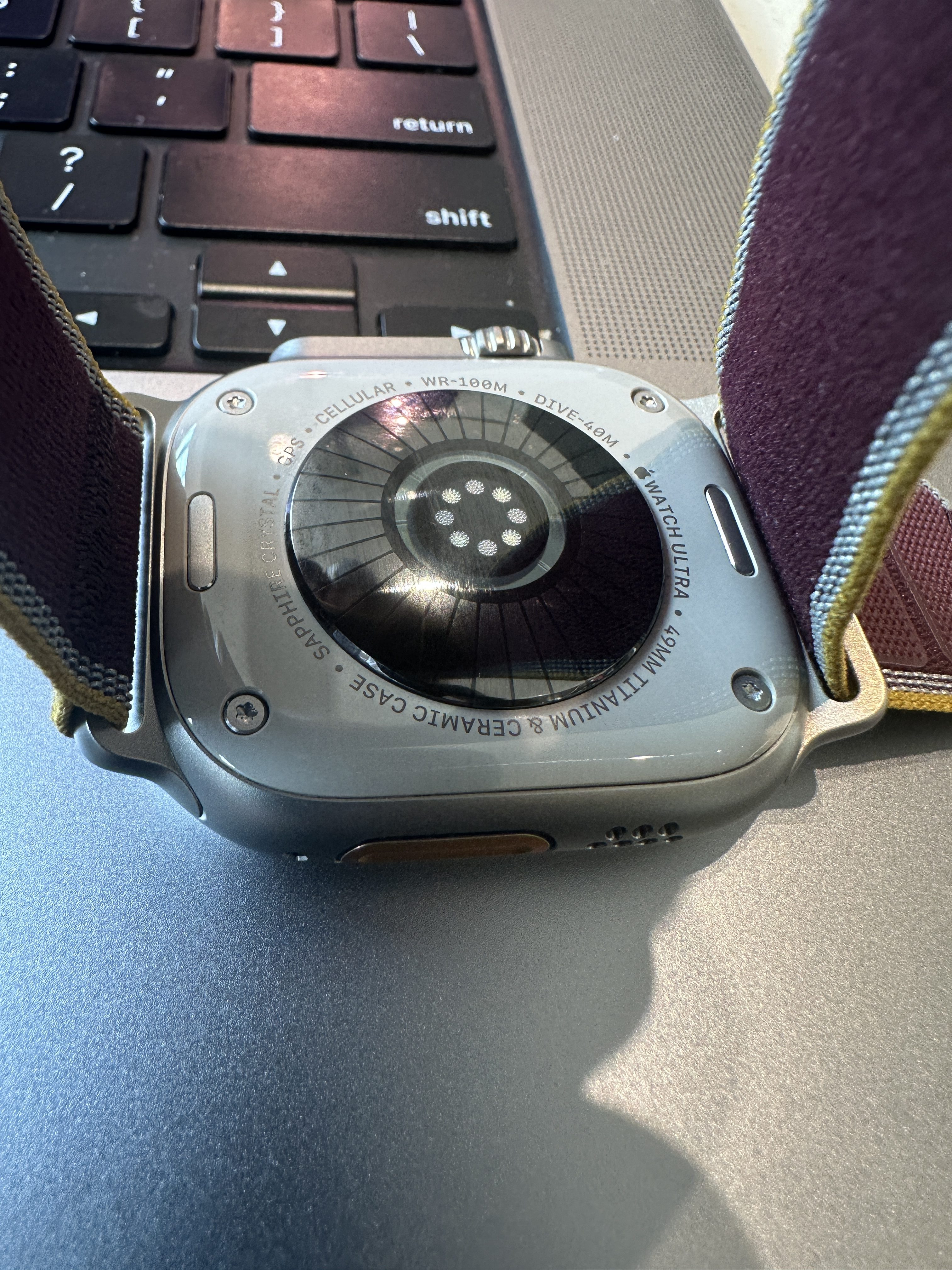
Now if you’re looking for major or minor differences in the watch, you won’t find any. Mostly. It looks the same. The watch, the packaging, everything. So what you will find is this:
This is the new “Health Sensing System” which is Apple’s term for new sensors that allow for sampling heart rate every 5 seconds instead of every 5 minutes, as well as sampling heart rate variability every 5 minutes throughout the day. And Apple has a study that they funded to back up that this is the most accurate sensor of its type. I will link the study here. And I would suggest that you take it with a grain of salt as this is an Apple funded study. Which means that it may not be taken seriously. Having said that, it facilitated a new score called the “Readiness Score” which shows how ready you are to take on the day.
Your readiness score ranges from 0-10:
Go for it: 8–10
Ready: 5–7
Pace Yourself: 2–4
Recover: 0–1
And your Activity data, daytime and overnight vitals, and sleep data factor into your overall readiness score.
Activity: Activity from both today and your recent history can impact your readiness score. Active calories, workout effort ratings, and Training Load data are all used to calculate the score. Increased activity in general can reduce your score, while steady or reduced activity raises it. Additionally, you might see your score go down during the day after a workout or activity.
Vitals: Readiness considers the status of your daytime and overnight metrics from the Vitals app. When your vitals indicate you’re Notably or Slightly off, your score is reduced. When all of your metrics are Typical or Favorable, your score is raised. Higher-than-usual heart rate variability (HRV) can lead to Favorable vitals and a high readiness score.
Sleep: Your sleep score from the previous night and your recent history can impact your readiness score. A low sleep score from poor-quality or inconsistent sleep can reduce your readiness score, while a high sleep score, or an improved sleep score, can raise your readiness score.
So ideally you want to be within 5 or up to do any strenuous activity. In my case, I not only used indoor and outdoor cycling as a baseline, but I measured this score against Athlytic which gives me Whoop like functionality from the Apple Watch Ultra. For the most part, they agreed with each other as I felt the way both apps said I would feel. Though I will note an exception or two. They based around Athlytic saying that based on my heart rate variability, I should take a rest. But I got a readiness score of 8. So I pushed myself indoors on the bike that day and I felt fine. So maybe there is something to this score. Apparently Athlytic is still collecting heart rate variability and resting heart rate data. Thus I may revisit this later.
Since the majority of this watch is basically an evolution rather than a revolution. I will cover off the rest of this pretty quickly.
Screen: This watch now does 3000 nits of peak brightness to make it easier to read in bright sunlight. Now I never had any issue reading this watch before. But the extra nits do help. It also has a screen that allow the reading of the watch that from more oblique angles. That on the bike I really appreciated.
Battery: Apple claims 50 hours of normal use from the watch which is just over 2 days. While not Garmin territory as their watches can last for days, I did find this to be better than expected. I charged my watch to 100% on a Sunday at 3 PM and got 28% on a Tuesday at 9:30 PM when the watch told me that I had to charge above 30% to get sleep tracking. That’s 54 hours with lots of room remaining. And I used cellular about 4 or 5 times during that period, and I recorded at least one workout a day. Thus Apple’s claim of 50 hours seems reasonable.
Charging: There is a new 10W charger in the box that allows the Apple Watch Ultra to add 18 hours of life with a 15 minute charge. So what Apple have clearly done is focus on the charging part of the equation by allowing you to charge faster rather than have the watch last longer.
Cellular: Like previous Apple Watches, these support cellular independence. But what is different is that this supports 5G cellular if the carrier supports 5G reduced capacity or RedCap for short. I am on Freedom Mobile so this isn’t supported, but if it were supported, I can expect better battery life and maybe faster speeds.
S11 Chip: Apple has a brand new S11 chip that is a 2 nm chip which promises efficient usage and better battery life. When I moved through the watch, it didn’t seem faster. But I am missing the new Siri functionality which will likely make any differences more noticeable. There is one feature that I will get to that this watch does offer. I come to in a second. Another note is that the Ultra 4 has 64 GB of storage on board. That’s a win. But there’s no easy way that doesn’t involve shoving all your music onto the Apple Watch via adding every playlist that you have on the iPhone unless you have an Apple Music subscription. That is not a win.
Materials: It’s the same titanium case that you got in the original Ultra. So no change there. But this time around I got the Trail Loop. And frankly, this is the most comfortable band that I have ever gotten from Apple. Though if you do any sweaty activities, it will stay wet for a wile.
Now comes the tough conversation. There’s two features that the S11 chip facilitates:
Live Rewind lets you recall what was just said in the previous 15 seconds of a conversation as a text snippet by double-pressing the Digital Crown.
Siri Recap, meanwhile, creates high-level summaries of conversations that you can review later.
They’re part of what Apple calls “Audio Intelligence.” And they are currently not here yet but are coming later this year. Apple has outlined these features via a thorough privacy strategy. The tough conversation starts with this. If you turn these features on, they are always listening. And even though nobody is attributed to anything that it records, I find this problematic. If these features are always listening, then anyone within earshot is being recorded. And they may not have consented to this. And if you add the fact that Apple Watches all look the same as the new Series 12 has these features as well, then that is really problematic as there is no way for you to tell if one Apple Watch has this feature and another doesn’t. To me, it seems one step away from Meta’s glasses which have be caught “up skirting” people and people who own Meta glasses seem to invest a lot of time to turn off any indication that the built in camera might be recording. You have to believe that Apple expects to be questioned if not sued over these features, and I for one will be interested to see how Apple handles this and keeps these features intact.
Another feature is the new Health App which is not out there either. That I am waiting for as the main failing that Apple Watches have is that the current Heath App is more of a dumping ground for data that has no context. What the new Health App will do is wrap some context around that data. I will circle back on that when it officially ships. But it will make a huge difference for non-developers as you will be able to action that data and make it useful for you.
Finally, the Apple Watch Ultra 4 has a price of $1099 CAD as you see it here. That’s a price that probably is hard to justify for 95% of the people out there as a Series 12 has all of these features and 24 hours of battery life at a lower price point. Plus this is also total overkill for 95% of the population from a functionality standpoint. But if you need the battery life (I do) or features like the “Action Button” (I do for about 4 months of the year), this is the Apple Watch to get.
Posted in Commentary with tags Apple on October 7, 2026 by itnerd
Over the last 24 hours I’ve been asked if a new tool that has appeared can be used to kill Apple Intelligence. So seeing as I have got a lot of interest in this, I will answer this question. First the tool. Indie developer Om Lahore published a project called RemoveMacAI on GitHub late last week, which promises to “turn off Apple Intelligence on macOS 27 and remove its downloaded models.” And his tool apparently uses the company’s asset service to remove downloaded models and prevent macOS from downloading them again.
Now this sounds good. But consider this. Apple Intelligence is so buried in MacOS that I really doubt that this doesn’t come with any side effects. Thus even though this tool can save 14GB roughly based on my own testing with virtual machines, I would skip it. Instead, there is this tutorial that describes how to turn off Apple Intelligence for all Apple Devices.
Having said that, Apple really needs a way to kill Apple Intelligence dead. I say that because I have clients who are thinking twice about buying new Apple hardware that only supports macOS 27 or iOS 27, or any OS that ends in 27 as they don’t want to have to deal with this. So if Apple doesn’t want their hardware sales to nosedive, they may have no other option than to support the official removal of Apple Intelligence sooner rather than later.
Posted in Commentary with tags Apple on October 1, 2026 by itnerd
Since yesterday at 4 PM Pacific time, AppleTV is out for “some users”. Proven by this screenshot from this page:
The cynical side of me says “some users” really means “most users.” but a check on my iPhone shows that it is working for me. Still, if it isn’t working for you, know that it is them and not you. In the meantime, it is unusual for Apple to have such a long outage. Thus you have to wonder what the issue is and when it will be fixed.
Posted in Tips with tags Apple on September 14, 2026 by itnerd
At 1PM EST today, Apple will release iOS 27 to the public. As long as you have a supported device, it will bring you new features and improvements to your iDevice experience.
If you want to see a full feature set, click here.
Speaking of supported devices, here’s what iOS 27 will run on:
iPhone Duo
iPhone 18 Pro Max
iPhone 18 Pro
iPhone 17 Pro Max
iPhone 17 Pro
iPhone Air
iPhone 17
iPhone 17e
iPhone 16 Pro Max
iPhone 16 Pro
iPhone 16 Plus
iPhone 16
iPhone 16e
iPhone 15 Pro Max
iPhone 15 Pro
iPhone 15 Plus
iPhone 15
iPhone 14 Pro Max
iPhone 14 Pro
iPhone 14 Plus
iPhone 14
iPhone 13 Pro Max
iPhone 13 Pro
iPhone 13
iPhone 13 mini
iPhone 12 Pro Max
iPhone 12 Pro
iPhone 12
iPhone 12 mini
iPhone 11 Pro Max
iPhone 11 Pro
iPhone 11
iPhone SE (2nd generation and later)
If your phone isn’t on this list, then it’s not supported.
If you are wondering why there are no iPads on the list, that’s because Apple has spun off the iPads into a separate OS called iPadOS which is due out at the same time. Having said that, this advice applies to iPads as well.
Now, since this is a major upgrade there is always a chance, no matter how remote that something can go sideways. To make sure that you’re not caught out by something unexpected, here’s what you can do:
1. Update your Apps: Make sure that all your apps are up to date before upgrading by opening the App Store app and seeing if any updates are required. This is important because it is possible that the changes that Apple has made on areas like privacy and performance could break an app that you rely on. Thus I find that it is always a good idea to check for updates and install them before a new version of iOS hits the streets.
2. Dump any uneeded photos, videos or apps: iOS updates tend to need a fair amount of free space to allow for a successful installation. Thus if you have anything less than 8GB of free space, consider deleting unused apps or photos/videos. In terms of the photos and videos you want to keep, you can move them to the cloud or a computer so that they’re safely stored without taking up space on your iPhone. I personally use iCloud myself, but Google Photos is another option.
At this point you should be good to go to upgrade to iOS 27. Key word being SHOULD. Upgrading an operating system isn’t a trivial process. But if you take these steps beforehand, you should reduce the risk of any issues that you might encounter.
One other thing before I go, you may want to consider not upgrading to iOS 27 and instead wait for iOS 27.1 to hit the streets before you upgrade as that’s likely to have additional bug fixes and also fix issues that hit the streets when iOS 27 comes out. Plus that’s the version that is going to bring Apple Intelligence to the table. I’ll be upgrading later today and if anything seriously goes off the rails, you’ll be the first to hear about it.
Posted in Commentary with tags Apple on August 26, 2026 by itnerd
Researchers identified AnonyMousKIT, a phishing-as-a-service platform built to bypass Apple’s Activation Lock on stolen devices, using AI voice agents (all posing as “Alice from Apple Support,” running on the commercial Vapi voice platform in English, Spanish, and Portuguese) to trick victims into handing over passcodes, Apple ID credentials, and two-factor codes, information Apple says it never asks for.
“The real story here isn’t that AI can impersonate Apple Support convincingly, it’s how cheap that’s become. $0.096 a call gets you a voice agent that can run the whole script in three languages: ask for the passcode, then the Apple ID, then a live 2FA code. That used to take a skilled scammer sitting on the phone. Now it’s a rented service with published pricing and customer support. AI didn’t invent this scam, it just took the labor cost out of it, and that changes who can run one and how many they can run at once.
It’s also a good reminder that the backend behind these operations is usually way messier than the polished lure emails suggest. Researchers got into months of call logs, transcripts, and persona configs because of two exposed file paths, not some clever hack. Even the people running these platforms don’t seem to have much visibility into their own exposure.
But the part worth actually worrying about isn’t stolen phones, it’s what happens when this same trick gets pointed at employees instead of consumers. Cheap, real-time voice AI means help-desk calls, vendor calls, password-reset calls are all about to get a lot harder to sniff out just by listening. If a fake “Apple Support” agent can talk someone out of a 2FA code for pennies, the same setup works just as well faking IT support to get into a company. Security teams need eyes on how AI is being used against them, not just how it’s being used inside their own walls.”
Apple users need to be alive to this threat along with many other threats. Because there will always be a new threat that users need to keep their eyes out for.
Posted in Products with tags Apple on August 5, 2026 by itnerd
Given that my original AirPods Pro were starting to die, I wanted to get a review in of the Apple AirPods Pro 3 before they significantly update them with iOS 27. In short, the Apple AirPods Pro 3 is the most fully formed that the AirPods Pro 3 are at the moment. Which either implies that more features are coming via updates, or a new AirPods are coming.
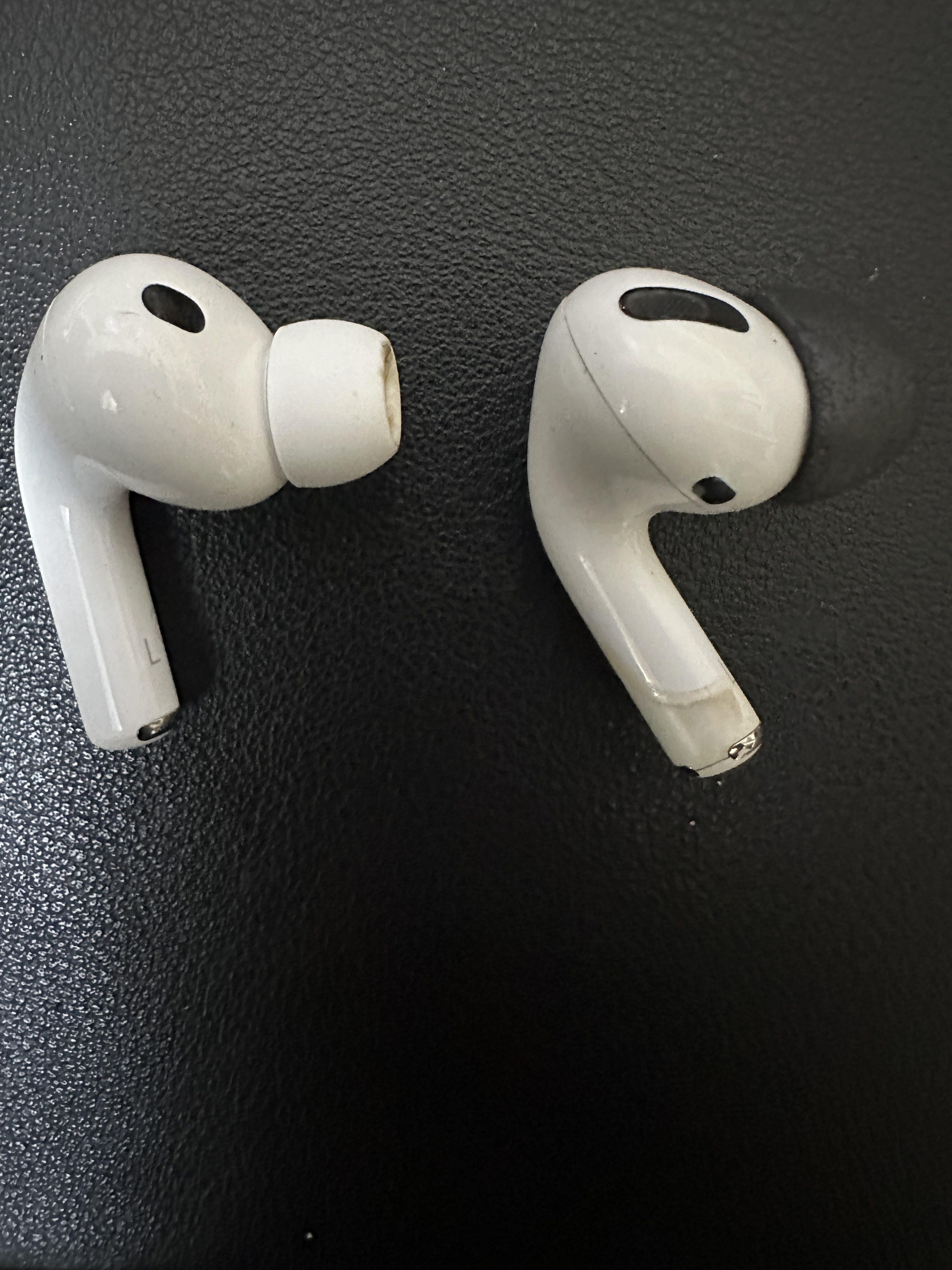
Anyway, here is a look at the AirPods Pro 3.
If you look at the AirPods Pro 3 on the left, you will see that Apple has changed the shape versus the original AirPods on the right. I find that they fit and stay in the ears better. Even during long sweaty indoor bike rides. One thing that I did note is that I used Comply foam tips to keep the original AirPods Pros in my ears. I don’t have to do that with the AirPods Pro 3 as I use the small hybrid (new for this version) tips that come with the AirPods Pro 3. I should also note that you get four sizes of tips this time around starting with an XS size.
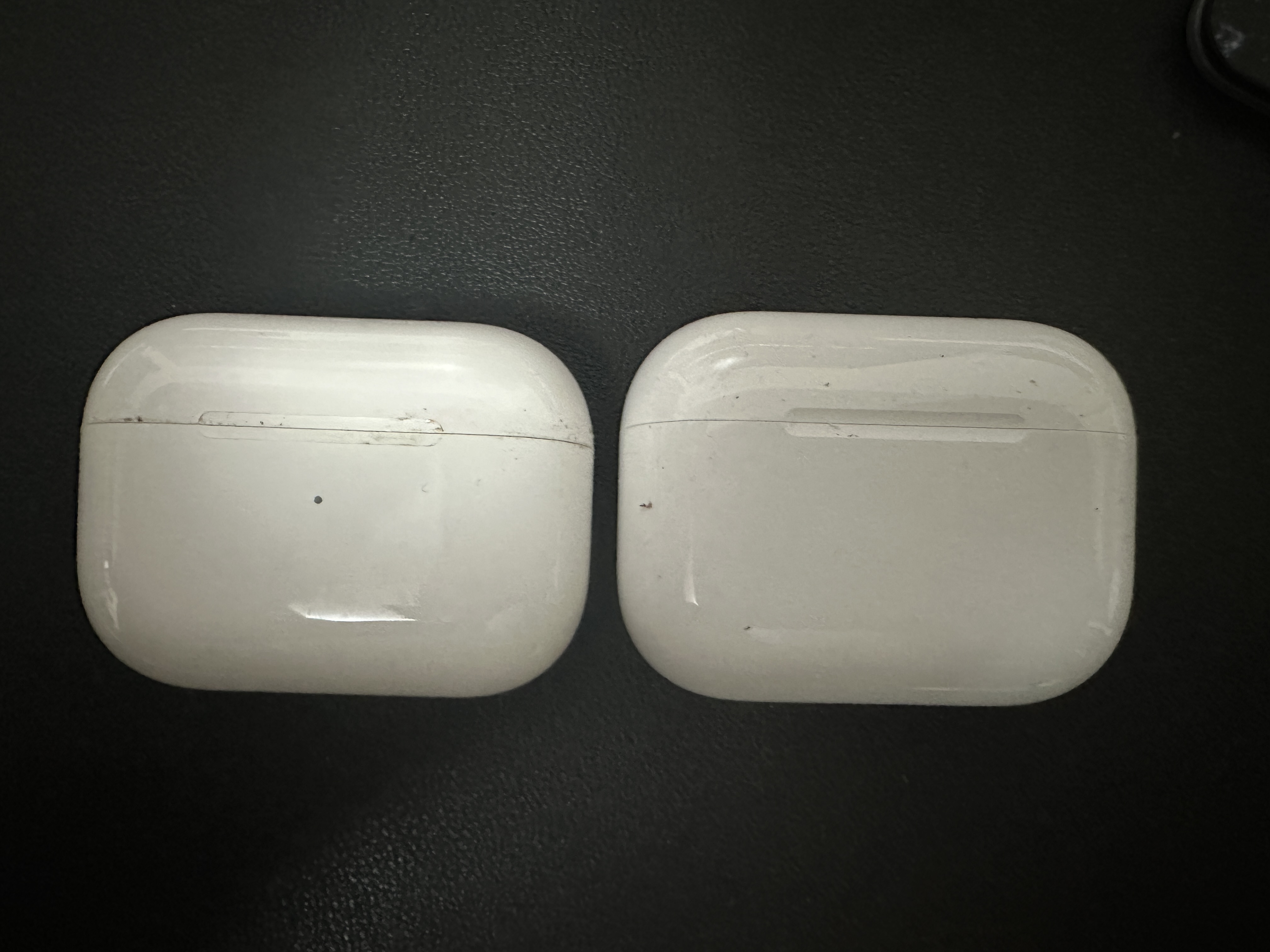
The case is bigger based on the AirPods Pro 3 which gives you eight hours of battery life and the case offers an additional 16 hours, for a total of 24 hours. This is a bit of a drop from the AirPods Pro 2 which offered 24 hours of battery life from the case and six hours from the buds. In other words, it’s a drop from the case perspective. But honestly, I don’t notice the difference because the earbuds last so long. In fact, I run them charging the case to 80% most of the time. Another plus with the case is the the fact that these buds have FIND MY built in that allows for precision finding like an AirTag. Finally, Apple took away the visible light and put it under the white plastic so that you can tell the charge status at any time. Ditto with the external button.
One of the hero features of AirPods Pro 3 is the heart rate sensor. And I am here to say that they work. I tested them with a chest strap and found them to be either on par with that or within one beat per minute. The other thing that they do is to switch between the Apple Watch and the AirPods Pro 3 depending on which is more accurate. It also means you don’t need an Apple Watch to record a workout if you had an iPhone. Could this mean that Apple taking the attitude that you don’t need an Apple Watch to do a workout? Hmmm….
Sound quality is top notch. The AirPods Pro 3 are have more bass. But not overwhelming as they are don’t sound like a Beats product. Which is also an Apple product. In the end, they have the typical Apple sound signature with more bass. I have no issue with them. But Apple is adding an EQ feature in iOS 27 to change that should you want to. In terms of noise cancellation, I don’t know if it is 2x better (relative to the AirPods Pro 2) according to Apple. But it is mostly better. If you have a constant drone that you want to block out, airplane engines for example, then they block that out easily. However I don’t get the same effect with subways trains on Line 1, Line 2 or Line 5 in Toronto. In other words, I would say that your mileage may vary.
Live Translation works surprisingly well. Though not perfect. I tested it with Spanish and Mandarin. The translations are quick enough to keep a conversation flowing, and they feel natural rather than robotic. Even with the slight delay while it waits for context, the results are clear and easy to follow. The feature also works in reverse. When you respond to someone who is speaking another language, your words will appear in the other person’s language on your iPhone screen. It wasn’t perfect as jargon or any sort of colloquial speech can trip it up.
So this sounds close to perfect. What trips it up? Well, it is iPhone only. While you can make it work with an Android phone, I am here to say that you should not bother as it will not work well. While Apple could make this more like a Beats product and make it work with both Android and iOS, it likely will not happen. Apple is also addressing the other issue which is an EQ feature for those who want it. Other than that, I can’t really pick out anything that is wrong with the AirPods Pro 3.
The Apple AirPods Pro 3 are $329 CDN. But if you check Amazon, you can find it cheaper at times. Assuming that you’re part of Team iOS in terms of your phone, these are the best earphones available right now. And they will get a bit better in iOS 27.
Posted in Commentary with tags Apple on April 1, 2026 by itnerd
If you have an older iPhone or iPad that still runs iOS 18, Apple has just released a newer version of iOS and iPadOS 18.7.7. It’s meant to fix this vulnerability that is in the wild and should be considered a today problem. Your other option is to go to iOS 26 which is not affected by this vulnerability and protects you from other vulnerabilities as a bonus. But whatever you do, don’t delay and patch your iDevice ASAP.


Apple Responds To “Crackgate”…. Too Bad There’s A Second Video Out There
Posted in Commentary with tags Apple on October 27, 2026 by itnerdApple has finally responded to the iPhone Duo controversy known as “Crackgate”. Which I wrote about here and here. Via 9to5Mac:
“The response to iPhone Duo from early users has been incredibly positive, and we are seeing exciting things from developers who are rapidly updating their apps to take advantage of its unique form factor. We are aware of an issue impacting the inner display on a small number of iPhone Duo units. If users experience issues with their iPhone Duo display, they should contact AppleCare for a replacement.”
Pretty short statement. But honestly, at least they said something. Now it is impossible to say how many units have this issue. Or how it compares to say Samsung in this category. But because of the volumes that Apple tends to sell in terms of phones, if even 1% of units have in issue, it’s a “gate”.
Having said that, YouTuber JerryRigEverything has put out a second video where he clearly lays the blame for this issue on Apple’s doorstep. I won’t spoil things for you but you can watch the video here:
Is “Crackgate” overblown? Sound off in the comments.
Leave a comment »