Tecsys and SVT Robotics partner to simplify warehouse robotics deployment

Posted in Commentary with tags , on December 6, 2022 by itnerd

Tecsys Inc., an industry-leading supply chain management software company, and SVT Robotics Inc., a leader in enterprise software for the rapid deployment of industrial robotics, have partnered to develop and launch an out-of-the-box integrated connection between the Tecsys’ Elite™ supply chain platform and SVT’s SOFTBOT® Platform. The integration will provide Tecsys Elite™ customers faster deployment and lower complexity without the need for lengthy custom code development often involved in multi-system automation and robotics deployments.

SVT Robotics is an enterprise software company that is revolutionizing robot deployments in the warehousing and manufacturing industries. With certified connectors to many of the industry’s foremost automation providers, and partnerships with companies such as 6 River Systems, Fetch Robotics (Zebra Technologies), Locus Robotics, MiR, OMRON, OTTO Motors and many more, SVT’s SOFTBOT Platform enables companies to deploy the robots, automation, and IoT devices they need in just days or weeks.

Tecsys contends that bringing automation into a warehouse should begin with a needs assessment and design plan, which then informs hardware selection that will meet those needs. Whereas some software vendors operate as automation resellers for a limited set of systems, Tecsys’ partnership with SVT empowers supply chain organizations to assess, design and integrate across a wide spectrum of automation choices. The result is a warehouse operation powered by end-to-end WMS functionality and easily automated workflows using today’s most innovative technologies.

Elon Musk Installs Beds For Twitter Employees….. WTF??

Posted in Commentary with tags on December 6, 2022 by itnerd

I guess that when Elon Musk said that he wanted employees at Twitter to be “hardcore”, I guess that being able to sleep at work qualifies as being “hardcore”. I am basing that on the fact that Elon is installing beds for Twitter employees:

On Monday, employees returning to work at the company’s San Francisco location were greeted by modest bedrooms featuring unmade mattresses, drab curtains and giant conference-room telepresence monitors — a significant upgrade over the Therm-a-Rest+sleeping bag situation showcased by one Twitter employee in November. One room even has a plant.

A photo of one converted bedroom shared with Forbes showed bright orange carpeting, a wooden bedside table and what appears to be a queen bed, replete with a table lamp and two office armchairs just begging for convivial workplace collaboration.

One source said that no announcement or context was provided to employees, and presumed that the beds are for remaining “hardcore” staffers to be able to stay overnight at the office. “It’s not a good look,” they said. “It’s yet another unspoken sign of disrespect. There is no discussion. Just like, beds showed up.”

Doesn’t Elon have something better to do? Like stop advertisers from leaving or getting ad revenues up because they are in free fall at the moment? Clearly not. I really don’t get what his thought process is and how these beds will help Twitter make money. This is just stupid and sure to backfire on Elon.

Bell Gigahub Issues Seem To Be Resolved

Posted in Commentary with tags on December 6, 2022 by itnerd

I’ve been tracking issues with Bell’s new Gigahub which is part of their 8 Gbps fibre rollout. Specifically there were issues with getting PPPoE pass through to work with your own router. PPPoE bypass by far the cleanest way to use your own hardware. That is assuming that your router can handle the overhead that PPPoE creates so that you get the speed that you’ve paid Bell for. It became clear that this was a Bell issue and they have been working on a updated firmware to address this. I’ve been following a thread on DSL Reports where it is becoming clear that the firmware that is working for those who have been testing it. That’s very good news.

If you are in this situation, my suggestion would be to go to the Bell Direct Forum at DSL Reports and ask a user named Bell_Dom who is a Bell employee to push the firmware to your Gigahub. Eventually I would assume that this will be pushed to all Gigahubs so everyone can benefit from this new firmware.

UPDATE: Bell appears to be rolling out firmware to Gigahub users. Details here.

Eufy Releases An App Update That Won’t Make Their Issues Go Away

Posted in Commentary with tags , on December 6, 2022 by itnerd

Over the weekend I posted a story about Eufy and the fact that they have lied about the security that their had for years. And that my belief is that they should be banned from sale because this isn’t the first time that this has happened. Part of my belief that they should be banned comes from the fact that I don’t believe that Eufy is serious about gaining the trust of their users. This is being reinforced by the news that Eufy isn’t patching out a potential security issue in the Eufy Security app. Instead Eufy is just telling users that their thumbnails will be uploaded to the cloud when they choose specific notification settings in the app;

As of Monday, an update has been rolled out to the Eufy Security app to add a statement disclosing that thumbnail images will be uploaded to the company’s cloud servers. 

For you to get notifications with thumbnails in them from a security camera, a thumbnail has to be uploaded someplace. That’s true for any camera system. And part of the problem is that Eufy sells these cameras with the expectation that they are completely private. Which clearly they are not. Now that Eufy has clarified this, I am guessing that they hope that this issue will go away. But it won’t because this doesn’t do anything about the ability for a threat actor to stream video. Eufy hasn’t commented on this as far as I know. And there’s no sign that they will do anything about it.

Thus if Eufy was hoping to make this issue go away, I don’t think that this will do it.

Guest Post: 42% of manufacturers in the UK endured a cyber incident in the last 12 months

Posted in Commentary with tags on December 6, 2022 by itnerd

According to data presented by Atlas VPN, 42% of manufacturers in the UK have been victims of cybercrime within the past year. 

Luckily, the vast majority (74%) stated that the cyber security measures in place prevented any commercial damage. 

However, the remaining 26% informed that they had suffered significant financial loss, with losses ranging from £50,000 to £250,000. 

The survey in question was conducted by Make UK, the voice for manufacturers in the UK, together in association with Blackberry Cybersecurity. A total of 112 manufacturers based in Britain participated in the study. The data was published on December 1st, 2022. 

The overall trend within the manufacturing security landscape in the UK remains relatively unchanged between 2022 and 2021. 

Throughout both periods, around one in ten companies were victims of cybercrime and incurred financial, reputational, or operational damages.

Production halts were the most prevalent outcome of a cyberattack (65%), with reputational damage coming in second (43%). In other words, financial losses incurred were a result of stopping production or loss in customer trust.

Besides that, around three out of ten manufacturing firms were attacked and infiltrated but were able to mitigate any business impact due to the cyber security processes in place.  

Vulnerabilities and cost concerns

Manufacturers in the United Kingdom confront a slew of cybersecurity threats, ranging from simple staff mistakes to sophisticated targeted attacks. 

Maintaining legacy IT (45%), a lack of cyber capabilities within the organization (38%), and granting access to third parties for monitoring and maintenance (33%) were listed as the top three cybersecurity vulnerabilities. 

According to manufacturers, the expense of cyber security tools is the most important obstacle to enhancing their degree of cyber protection. Almost four out of every ten manufacturers said this.

Stephen Phipson, Chief Executive at Make UK, commented:
 

While cost remains the main barrier to companies installing cyber protection, the need to increase the use of the latest technology makes mounting a defence against cyber threats essential. No business can afford to ignore this issue and while the increased awareness across the sector is encouraging, there is still much to be done.

To read the full article, head over tohttps://atlasvpn.com/blog/42-of-manufacturers-in-the-uk-endured-a-cyber-incident-in-the-last-12-months

Pediatric EMR Vendor Hacked…. 2.2 Million Affected

Posted in Commentary with tags on December 5, 2022 by itnerd

hacking incident at a cloud-based electronic health records software vendor has surfaced

Pennsylvania-based Connexin Software Inc., which does business as Office Practicum, reported the hack to the U.S. Department of Health and Human Services on Nov. 11 and said it involved a network server.

Connexin in its breach notification statement lists about 120 pediatric practices affected by the incident.

In the statement, Connexin says that on Aug. 26, it detected “a data anomaly” on its internal network. A forensics investigation determined that an unauthorized third party had gained access to an internal computer network, removing some data contained in an “offline” patient data set used for data conversion and troubleshooting.

Connexin’s “live” electronic medical record system was not accessed, and the incident also did not affect any pediatric practice groups’ systems, databases or medical records systems, the statement says.

In any case, the range of patient data potentially compromised in the incident is wide. Connexin says patient information affected may have included name, guarantor name, parent/guardian name, address, email address, date of birth, Social Security numbers, health insurance information and medical and/or treatment information – including procedures, diagnosis, prescription information and physician names.

Financial information – such as billing claims, invoices and patient account identifiers used by providers – was also contained in the affected data set.

John Gunn, CEO, Token says the following:

“Hackers are known for chasing quick scores and fast payoffs, but surprisingly they also “invest” for the future. They have spent years cultivating fake identities on Facebook, LinkedIn, and other social media to commit crimes and they harvest data for future crimes as they did in this instance. Each year, more of the victims of this breach will celebrate their 18th birthday and become prime targets to have their identity stolen because the hackers already have their SSN and other key information.”

Total number of people affected: 2.2 million. That’s not trivial. Hopefully someone investigates this data breach and holds any parties who allowed this to happen to account.

UPDATE: I have additional commentary from Chad McDonald, Chief of Staff and CISO, Radiant Logic:

     “A breach of this size will have insurmountable repercussions for pediatric patients long after this is reported. The information obtained in this attack can be used for years in social engineering attacks, phishing attempts and more. Furthermore, while data conversion and troubleshooting practices are necessary, real patient data should almost never be used for this.”

Rogers Releases New Internet Speed Tiers…. With The Same Pathetic Upstream Speed

Posted in Commentary with tags on December 5, 2022 by itnerd

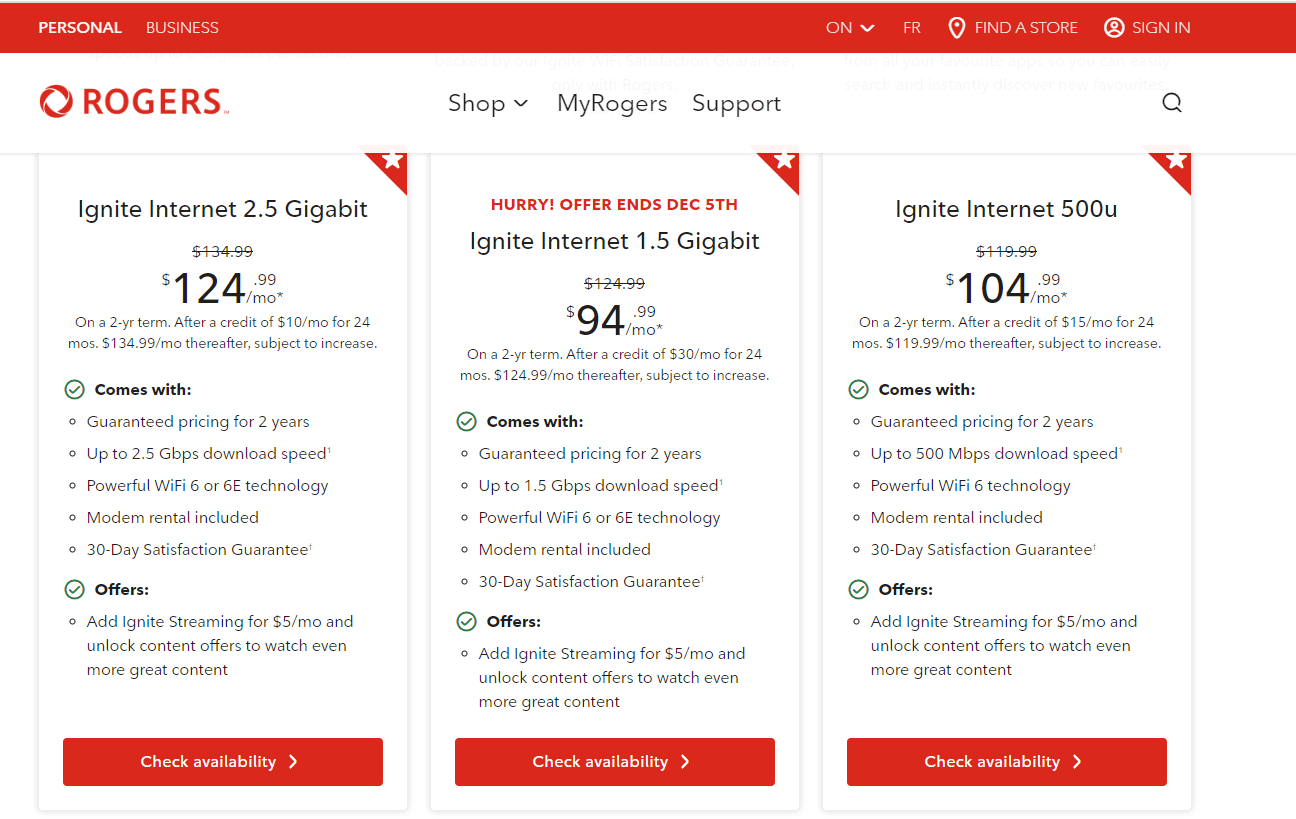
Just this morning a reader of this blog pointed me towards this page on Rogers website where it appears that Rogers has released new Internet speed tiers:

It looks like Rogers has deleted the 1 Gbps tier and added a 1.5 Gbps and a 2.5 Gbps tier. As always, the Devil is in the detail. so if you go looking for detail, you’ll notice this:

Now I am using the 1.5 Gbps tier as an example of this as I couldn’t find an address where the 2.5 Gbps tier was available, but the first thing that should grab your attention is the upload speed which is a laughable 50 Mbps. Any of Bell’s Internet tiers will simply destroy this without breaking a sweat if a potential customer compares the two against each other. How Rogers can put this out there and try to sell it with a straight face is beyond me. The other thing that I notice is that they call this “Pure fibre to your home”. I find that unlikely to be the case given the upload speed. This sounds like Rogers existing cable infrastructure jazzed up to sound like it is competitive with Bell’s fibre to the home offering, when in actual fact it is not even in the same league.

What kills me is that Bell has had actual fibre to the home for five or more years now. Meanwhile Rogers fibre footprint is so tiny, it’s microscopic because I am guessing that they are trying to milk every last cent from copper cable that they can. That leaves Rogers at a significant disadvantage. At this point, Rogers really needs to suck it up and start rolling out fibre everywhere they operate, or just roll out DOCSIS 4.0 instead which may give them a fighting chance against Bell. And if somehow Rogers and Shaw manage to close their deal to merge, Rogers will face the same problem with Telus out west. The bottom line is that while this is a mildly interesting development, this does nothing to make Rogers more competitive with Bell in areas where the two compete against each other.

Nice try Rogers.

Major Android Security Leak Disclosed

Posted in Commentary with tags on December 5, 2022 by itnerd

Bad news for anyone who owns a Samsung, LG, Xiaomi among other Android phones. Apparently this phones have been left vulnerable to malicious apps with system-level privileges, following the leaking of their platform-signing keys:

As shared by Googler Łukasz Siewierski (via Mishaal Rahman), Google’s Android Partner Vulnerability Initiative (APVI) has publicly disclosed a new vulnerability that affected devices from Samsung, LG, and others.

The core of the issue is that multiple Android OEMs have had their platform signing keys leaked outside of their respective companies. This key is used to ensure that the version of Android that’s running on your device is legitimate, created by the manufacturer. That same key can also be used to sign individual apps.

By design, Android trusts any app signed with the same key used to sign the operating system itself. A malicious attacker with those app signing keys would be able to use Android’s “shared user ID” system to give malware full, system-level permissions on an affected device. In essence, all data on an affected device could be available to an attacker.

Notably, this Android vulnerability doesn’t solely happen when installing a new or unknown app. Since these leaked platform keys are also in some cases used to sign common apps — including the Bixby app on at least some Samsung phones — an attacker could add malware to a trusted app, sign the malicious version with the same key, and Android would trust it as an “update.” This method would work regardless of if an app originally came from the Play Store, Galaxy Store, or was sideloaded.

Google’s public disclosure doesn’t lay out which devices or OEMs were affected, but it does display the hash of example malware files. Helpfully, each of the files has been uploaded to VirusTotal, which also often reveals the name of the affected company. With that, we know the following companies’ keys were leaked (though some keys have not yet been identified):

  • Samsung
  • LG
  • Mediatek
  • szroco (makers of Walmart’s Onn tablets)
  • Revoview

Yikes! I have a pair of comments from Venafi on this:

Tony Hadfield, Sr. Director of Solutions Architects at Venafi“This is a great example of what happens when organizations sign code without a plan to manage code signing keys. If they keys fall into the hands of an attacker it can lead to catastrophic breaches. The only way to prevent this kind of problem is to have an auditable, ‘who/what/where’ solution: how do you control signing keys, where are they stored, who has access to them, and which kind of code gets signed? You need this information to protect your keys and also respond quickly to a breach by rotating your public and private keys.”

Ivan Wallis, Global Architect at Venafi: This is a great example that showcases the lack of proper security controls over code signing certificates, in particular the signing keys for the Android platform. These certificate leaks are exactly related to this, where these vendor certificates made it into the wild, allowing for the opportunity for misuse and the potential to sign malicious android applications masquerading as certain “vendors”, similar to Solarwinds. Bad actors can essentially gain the same permissions as of the core service. The lack of the who/what/where/when around code signing makes it difficult to know the impact of a breach, because that private key could be anywhere. At this point it must be considered a full compromise of the code signing environment and key/certificate rotation must happen immediately.”

The article that I linked to has some really good advice in terms of protecting yourself. Specifically”

While the details of this latest Android security leak are being confirmed, there are some simple steps you can take to make sure your device stays secure. For one, be sure that you’re on the newest firmware available for your device. If your device is no longer receiving consistent Android security updates, we recommend upgrading to a newer device as soon as possible.

Beyond that, avoid sideloading applications to your phone, even when updating an app that’s already on your phone. Should the need to sideload an app arise, be sure you completely trust the file you’re installing.

This is advice that you should be following anyway as it will keep you safe from exploits of any type.
Google Canada kicks-off the year early for startups, with applications for the 2023 Google for Startups Accelerator Canada cohort 

Posted in Commentary with tags on December 5, 2022 by itnerd

As we head into a season of holiday cheer, Google Canada today announces applications are open for the 2023 Google for Startups Accelerator Canada – helping Canadian startups begin the new year strong. 

The intensive ten-week bootcamp is designed to bring the best of Google’s programs, products, people and technology to Canadian startups that leverage machine learning and AI in their company today or plan to in the future. Up to 12  Canadian technology startups will be selected to participate. 

Through the equity free program, Google wants to make it possible for startups to continue to thrive in Canada’s tech ecosystem. The accelerator provides technical training and strategic counsel through one-to-on mentorship opportunities with Google experts. 

Google has provided more infomation in a blog post that was posted today. Applications for the program are now open to startups across all sectors until February 1st with the program kicking off March 2023.  

Skills Shortage and Integration Challenges Halt Cybersecurity Adoption: BlackFog

Posted in Commentary on December 5, 2022 by itnerd

BlackFog today released the latest findings in their CISO research which shows that half of CISOs (50%) have been prevented from adopting new security solutions due to problems with integration, whilst security teams now use an average of 20 tools to combat cybersecurity threats. 

This research, sponsored by BlackFog and conducted by Sapio Research, is the second part of an exploration into the many frustrations and challenges faced by CISO’s, IT Security Leaders and Cybersecurity Professionals in the UK and US.  

This research also found that: 

  • 32% stated a lack of skills within their team prevented deployment of a new solution 
  • 22% would consider leaving their current role due to lack of budget for investing in the latest technology   
  • 22% reported that securing additional budget for implementing new technology was one of their biggest priorities in the first 6 months 

This research continues to highlight the lack of cybersecurity investment and the effect it has on those in leading security positions. 

You can read their findings here.